Going in to CAT assignment 3, the site I was looking forward to seeing most was the Amalienbad pool. Our group had looked up pictures the day before and determined it was a place we did not want to miss and prepared some towels just in case we had spare time to stay there for an hour or two. The pictures further reminded me of the Lifetime Fitness clubs back home because it was similarly indoor, grand, and very clean. This landmark, like the other CAT 3 ones, offered a novel experience for us because it was not a tourist attraction and exclusively locals made use of it, meaning there was a higher chance for a language barrier to take place. The most stark observation and I received from my visit to this pool was its ability to create a community in its general area through the intentional functional details of its architecture.
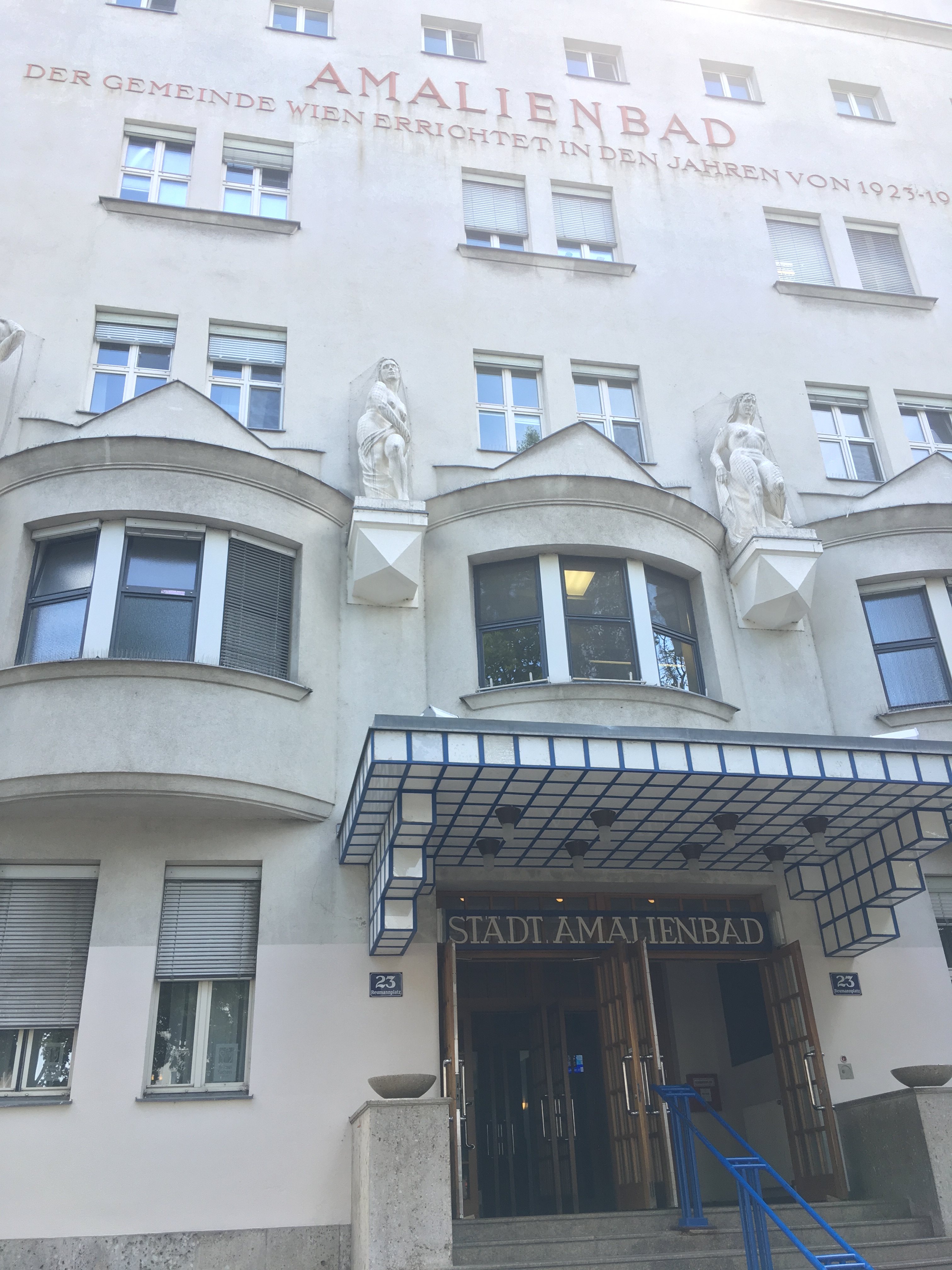
Due to closures along the U4 line, we arrived at the Amalienbad about an hour later than we had anticipated. It was around 11:00, and local Viennese people were entering the massive structure. At the top of the building read “DER GEMEONDE WIEN ERRICHTET IN DEN JAHREN VON 1923-1926,” which translates to “The Municipality of Vienna was built in the years 1923-1926.” This encryption echoed the ‘love for the whole’ and nationalist sort of sentiments that the government was pushing on its people during the Red Vienna Era. Thinking about the purpose of the message, I viewed it as a constant reminder to people passing by that their community as they know it has been standing for almost 100 years now and that that is something they should take much pride in.
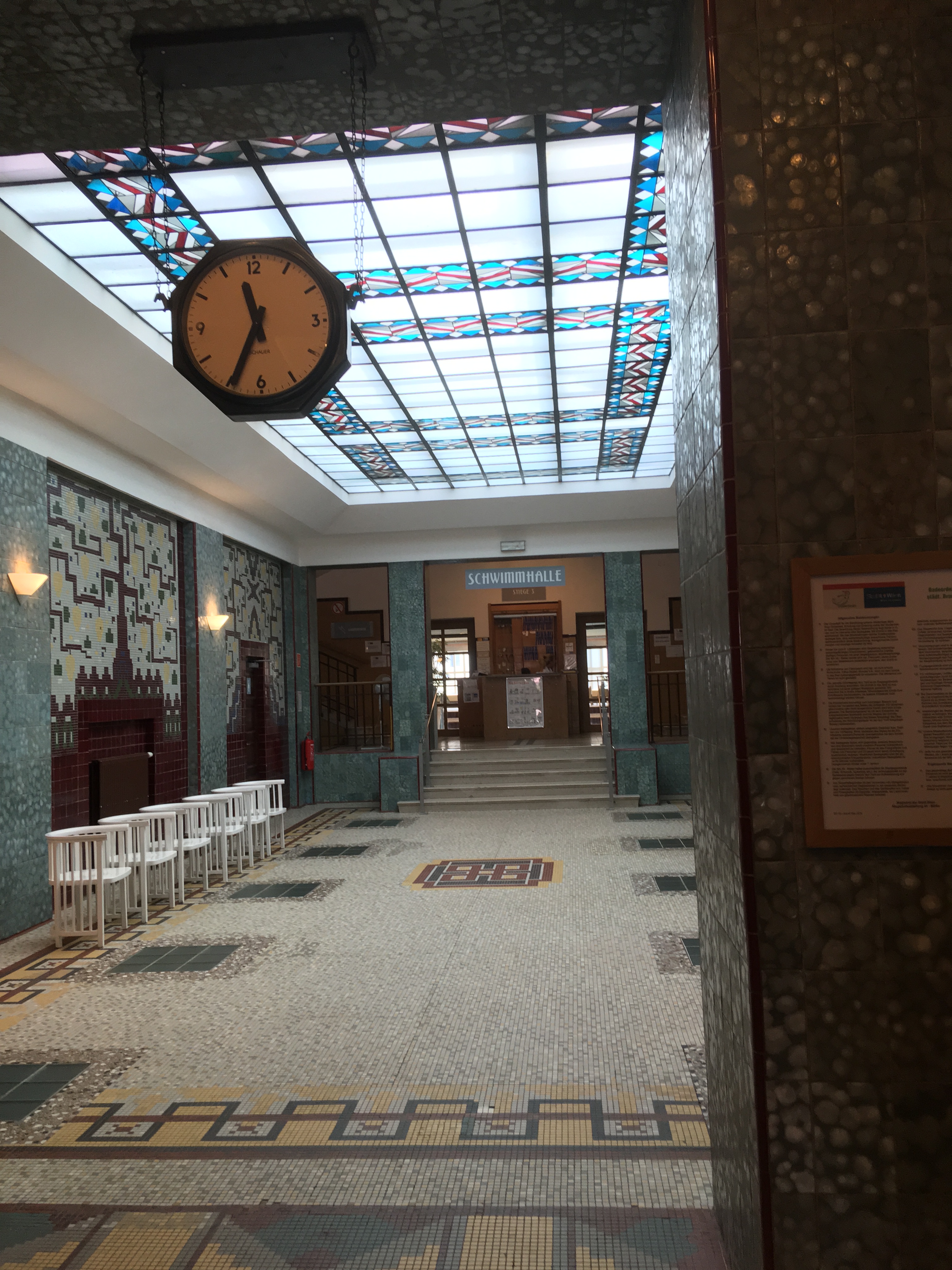
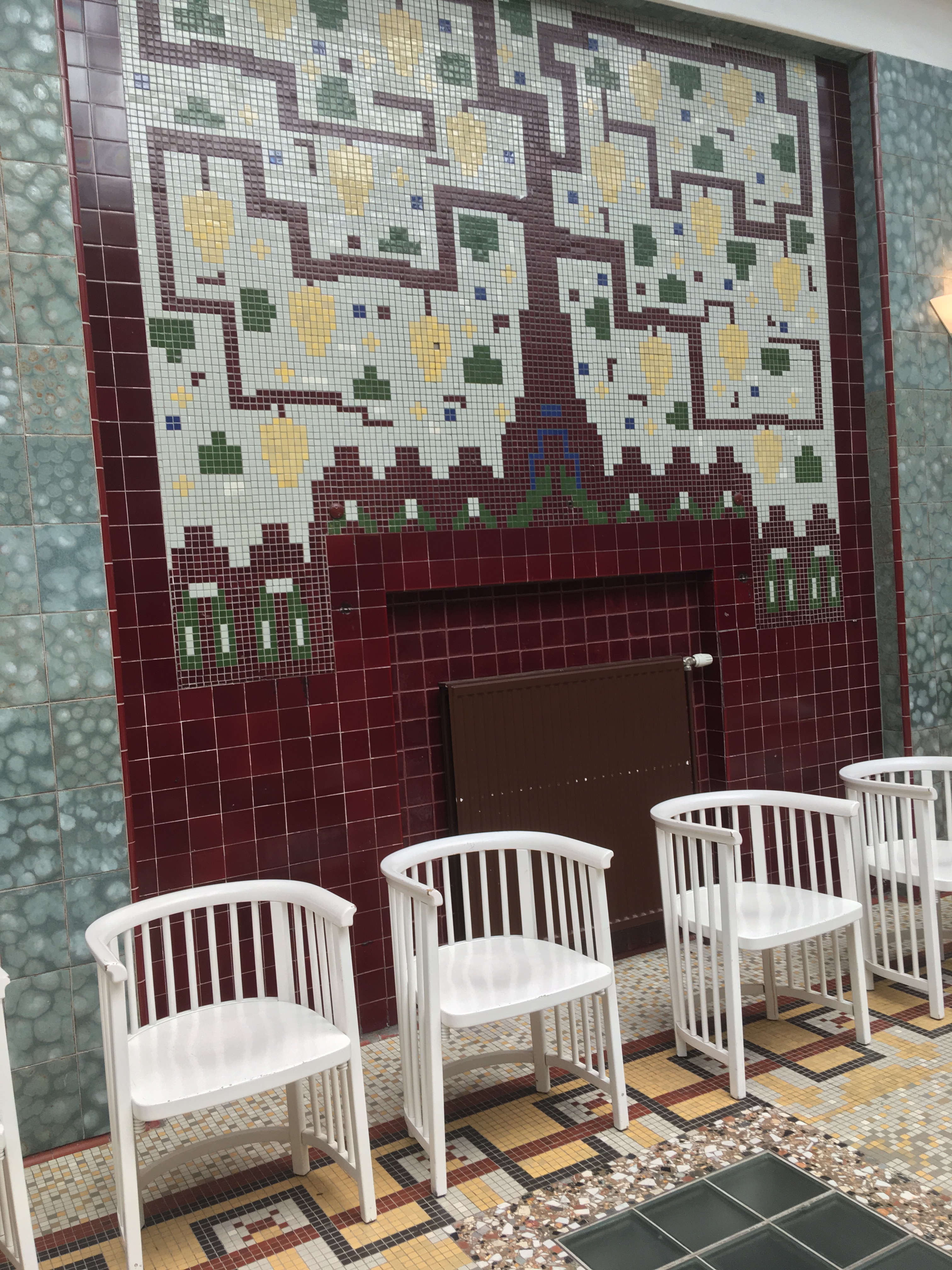
Next, we entered the building and we were met with non-slip tile floors and two rows of white chairs that spanned the hallway leading to the entrance of the pool itself. The type of tile fits its purpose well to ensure more safety for people walking around, and the rows of chairs offered a space for people to lounge and converse before going through the wooden doors into the pool area. Our group had about 2 hours we could spend here before heading to the next stop, but we had a hard time understanding the price system because the older lady running the stand did not speak English. Of course when there is a language barrier it is really frustrating for both sides, but at the same time it makes the visitor feel more authenticity radiating from the unfamiliar territory because there is no false facade because the main goal is to understand, not exploit for monetary profit. Furthermore, the language barrier also demonstrated to me that the culture is more intact and strong because it refuses or simply does not accept ‘outside’ ones. That was the positive twist I took on language barriers when interacting with the front door lady who had said that for 5 Euro, we could swim for 20 minutes, which was not a great deal at all.
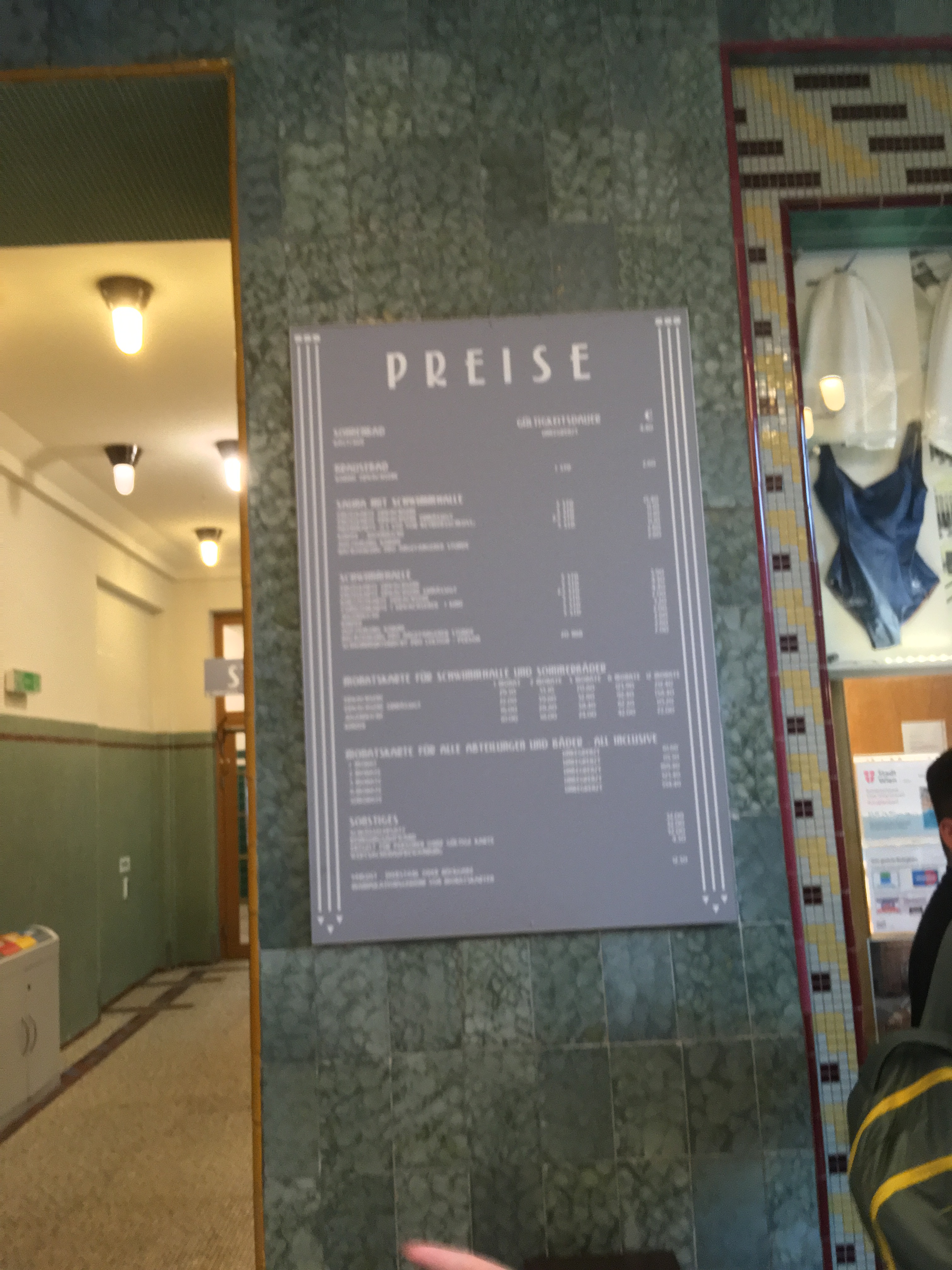
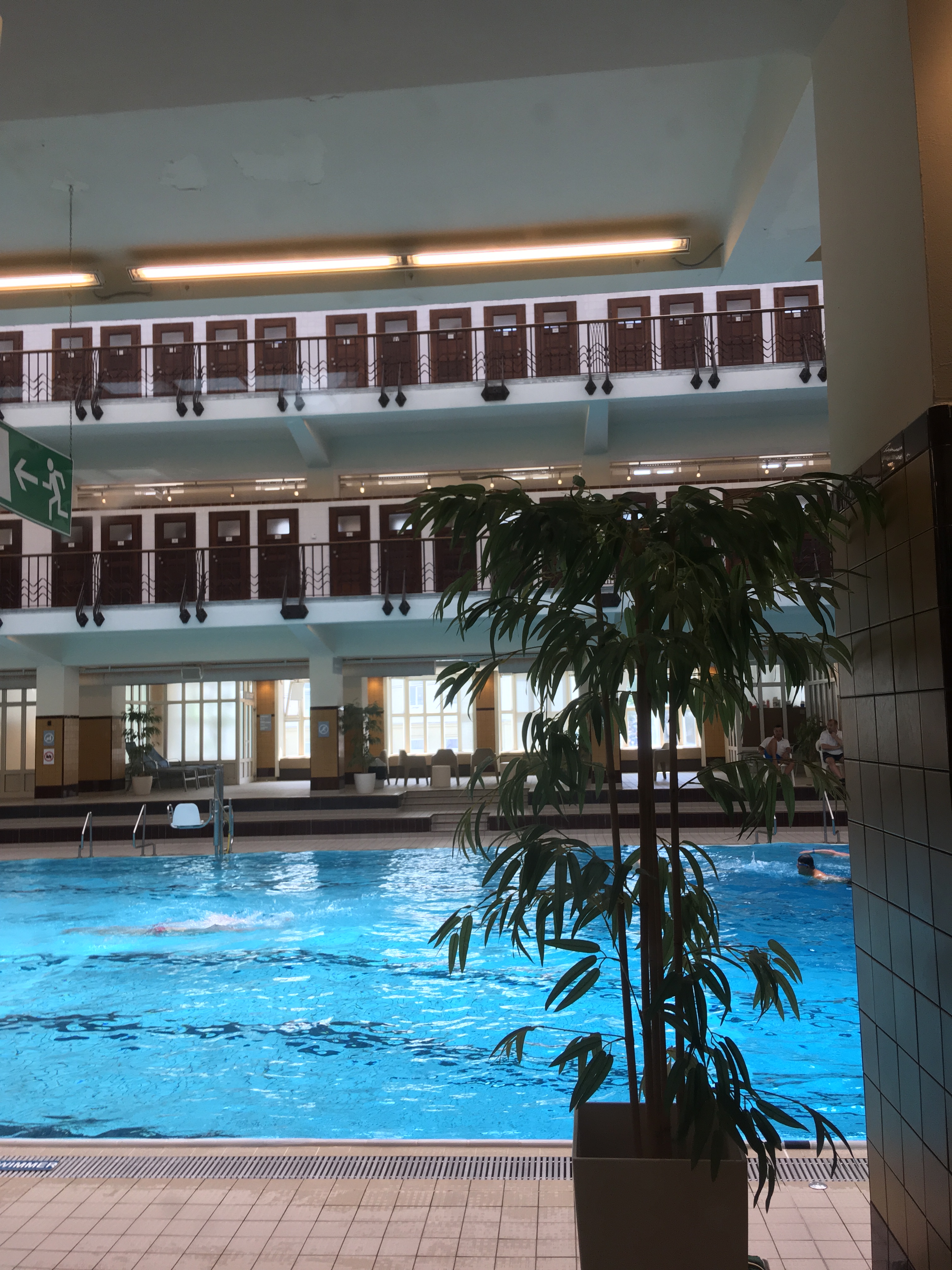
However, we then met another lady who spoke English, and she was able to clear everything up. Her job was to check that you had paid or are a member before entering the pool. She was able to clarify that it was actually 4.5 Euro for two and a half hours, which we would have taken up if we had more time. She was also able to describe the details of the pool itself from its history dating back over 100 years to the design of the pool. She allowed us to look inside, and what struck me most were the numerous individual changing closets available multiple floors up. It resembled a hotel where you could look over the ledge to see the pool at the center of it all, but I thought the design of having so many individual spaces, like large individual lockers, was counterproductive to creating a communal atmosphere. However, this lady explained that by having many individual spaces and a large common area, people are naturally going to gravitate towards the area of open space because that is where everybody else is and they want to be a part of what is going on.
Her explanation reflected a very interesting viewpoint on how Viennese people may view human nature given their historical and political ties to communism and socialism, but it could make sense. One could argue that people’s longing for community is what drives them to contribute to the whole. So, by dedicating spaces for people to become more familiar with one another in a fun, recreational environment, institutions and governments capitalize on progressing a sense of commonwealth among its citizens.
 Lorenzo