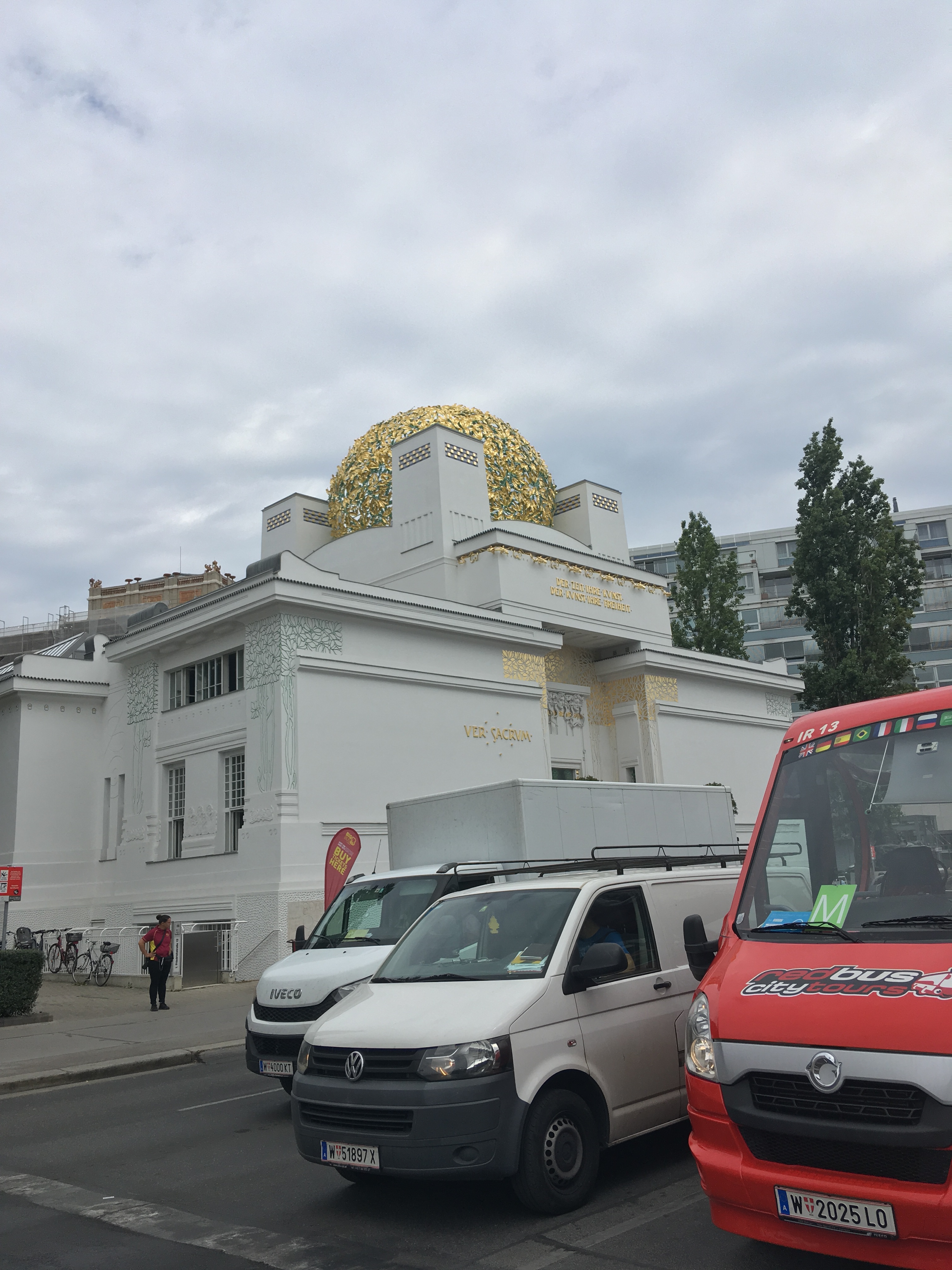
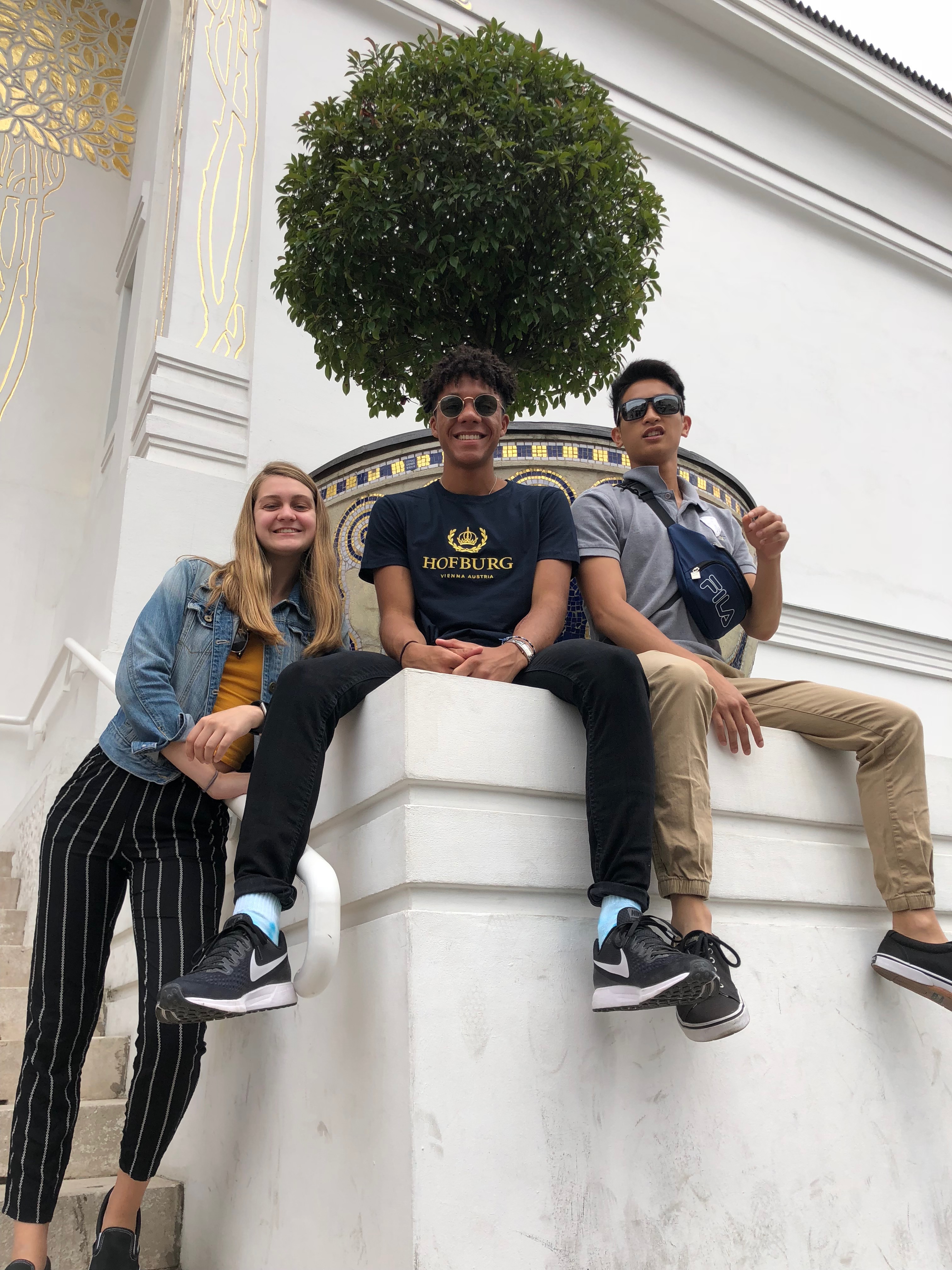
“That’s it. That’s the Secession Building,” one of my partners remarked as we walked from the U4 station. I thought to myself that the Secession Building stuck out like a sore thumb because of ball-shaped dome that looked like a ball with a bunch of old banana peels laid over it on top of another white building surrounded by seemingly typical Viennese architecture. Someone had mentioned that it houses some famous pieces of art, notably the Beethoven Frieze by an artist named Klimt. I remembered that Klimt was a key figure of the Viennese Secessionist Movement that occurred around the beginning of the twentieth century and has lots of other pieces like the Kiss which we saw earlier in the Belvedere Museum, so I was looking forward to checking out the piece he had in this building. However, when I saw that we had to pay to go in, I no longer wanted to go in. I thought about how I usually do not give in to paying for different tourist attractions that I did not know much about. Nonetheless, our group opted to stay outside and took pictures in front of the large, black vase in front of the entrance. We stayed here for about 10 minutes before proceeding to the Naschmarkt and the murals around it.
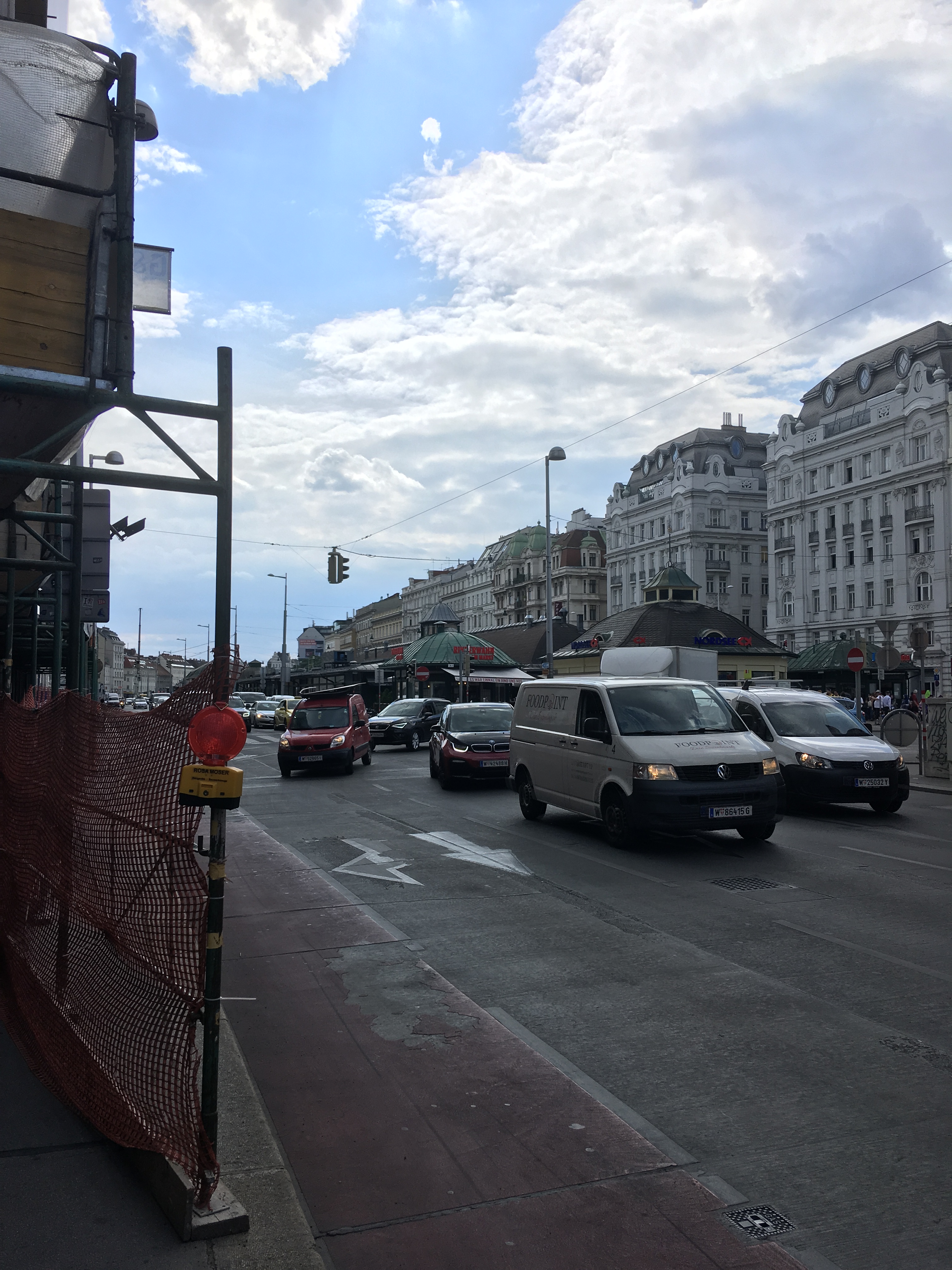
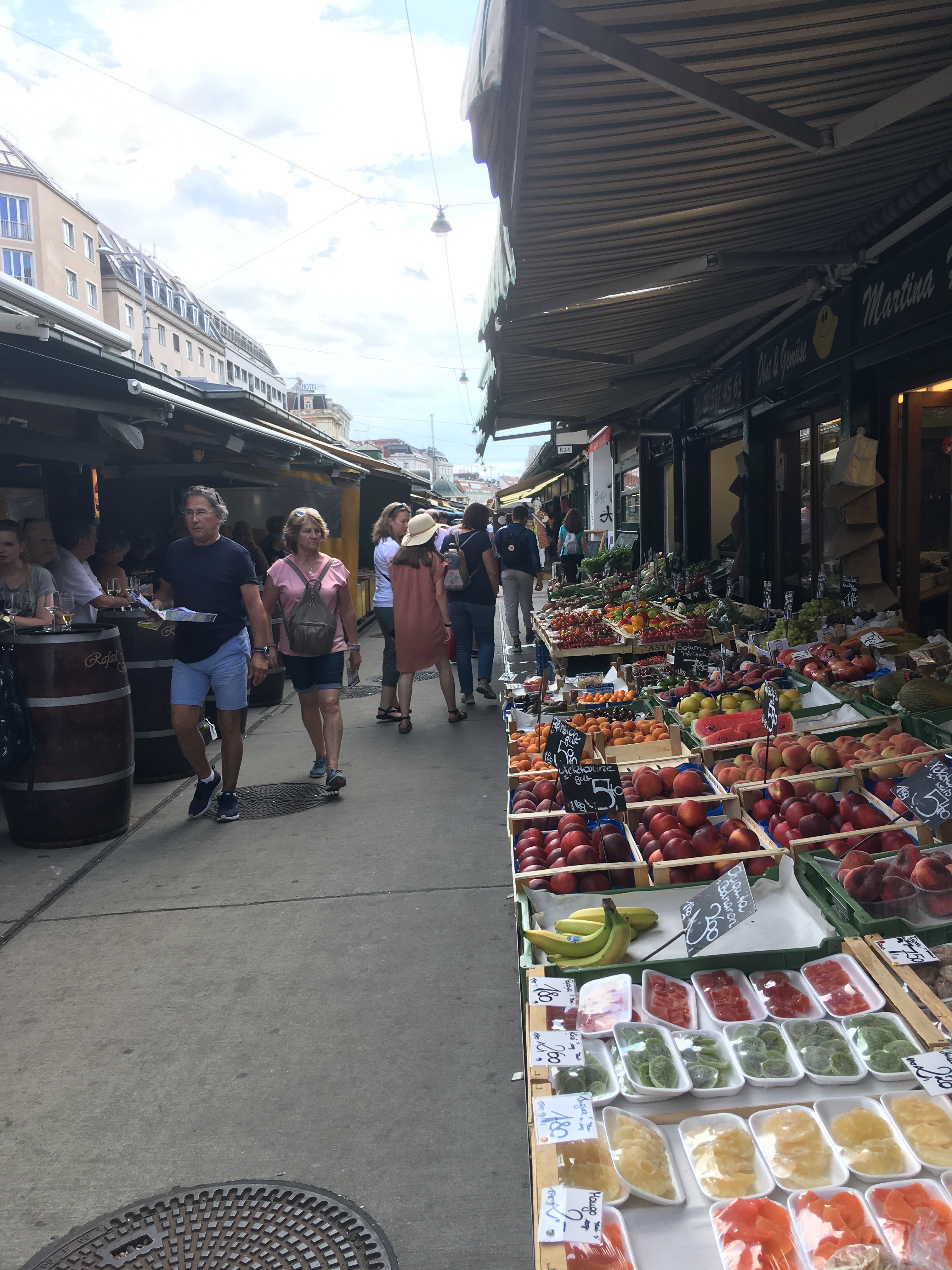
The Naschmarkt was oriented like a long strip in the middle surrounded by streets on two sides that had tall buildings. I could not help but notice the stark contrast between the market itself and the surrounding buildings. The market was noisy and lively full of different vendors selling things ranging from fruits to souvenirs to marijuana. There were people offering samples of cheese and sausage in an attempt to hook us on to buying some, and one tactic that a sausage vendor utilized were euphemisms about the sausage he was selling, also known as “his sausage.” His jokes cracked us up, but we had no purpose in buying the salty sausage in bulk besides rewarding him for his effort.
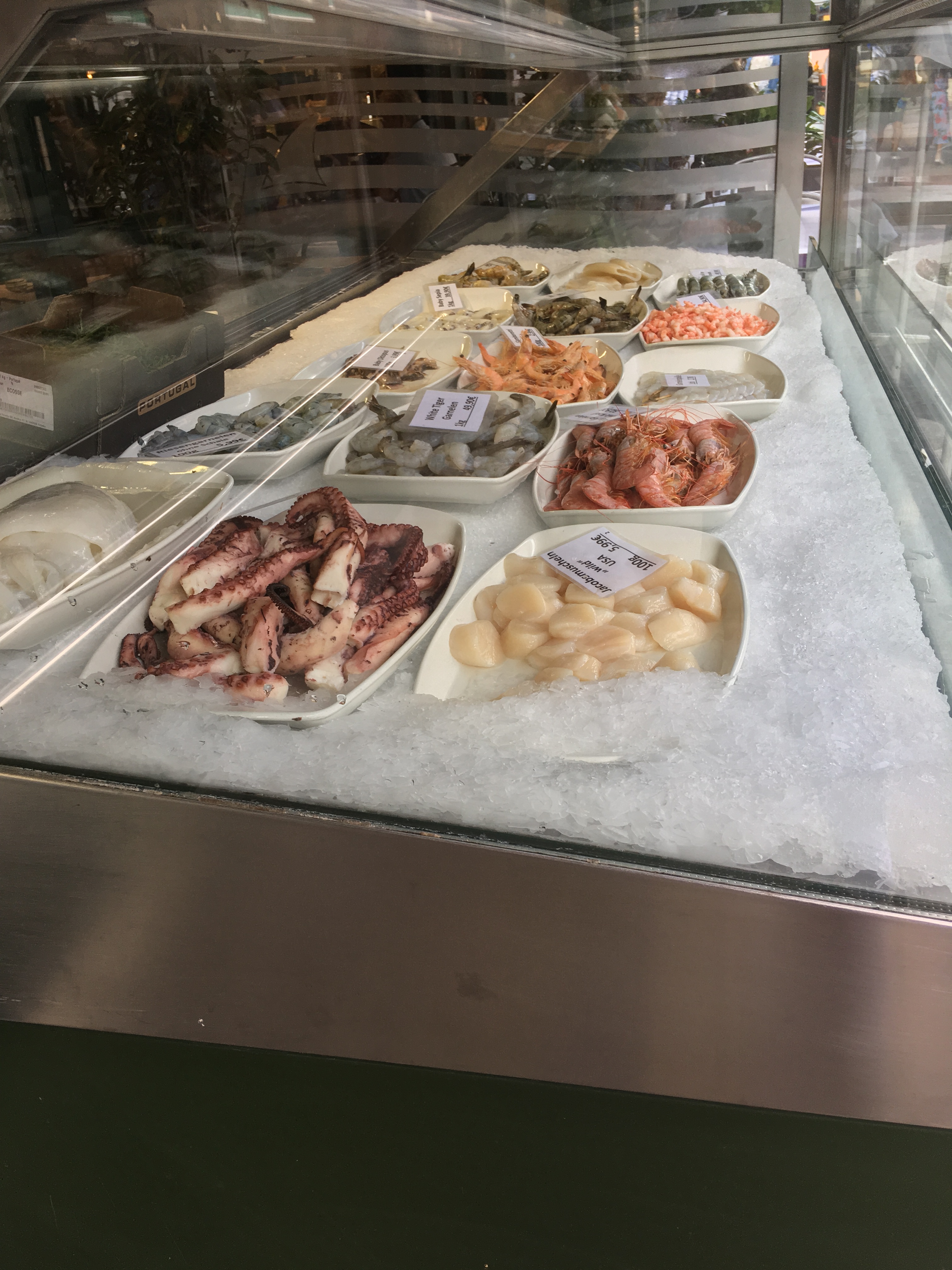
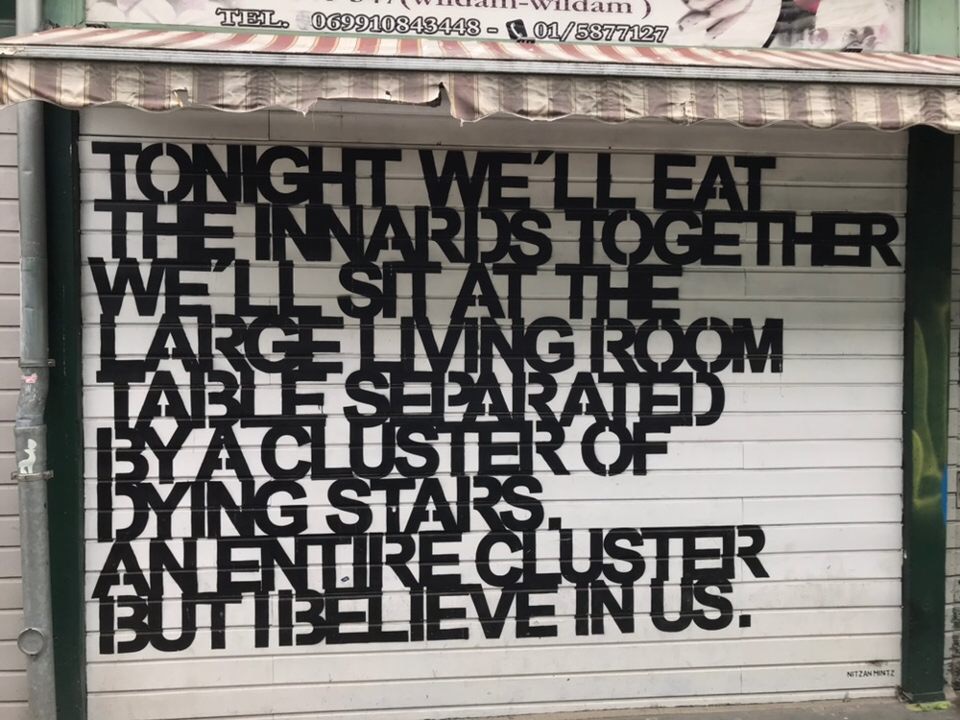
We continued on past a stand of raw seafood, and my mouth started salivating because it had been a couple weeks since I had last eaten some. I had been going in on the bratwurst and currywurst, so this was a good chance to switch it up. It worked out well because our group ended up eating at a seafood stand, and I was able to get some grilled squid. After eating, we continued down the flea market and came up to the wall murals on closed stores. There was one that a biker who appeared to riding so fast that his skin was peeling off his skeleton. Others were similarly graphic, but there were others that read positive messages about hope and friendship. This concluded our trip through the Naschmarkt, and we turned to the side to observe the eloquent building designs that surrounded the Naschmarkt.
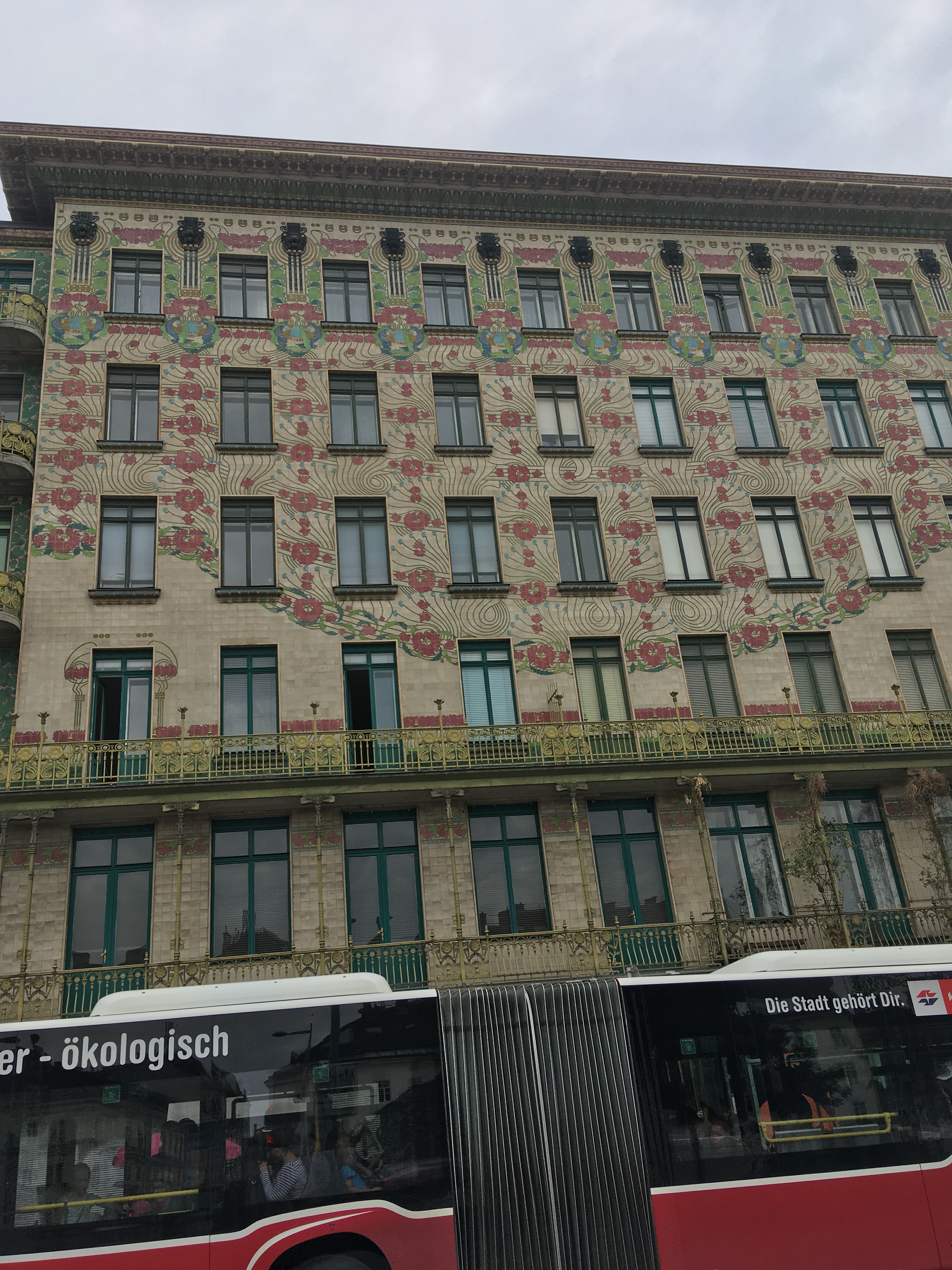
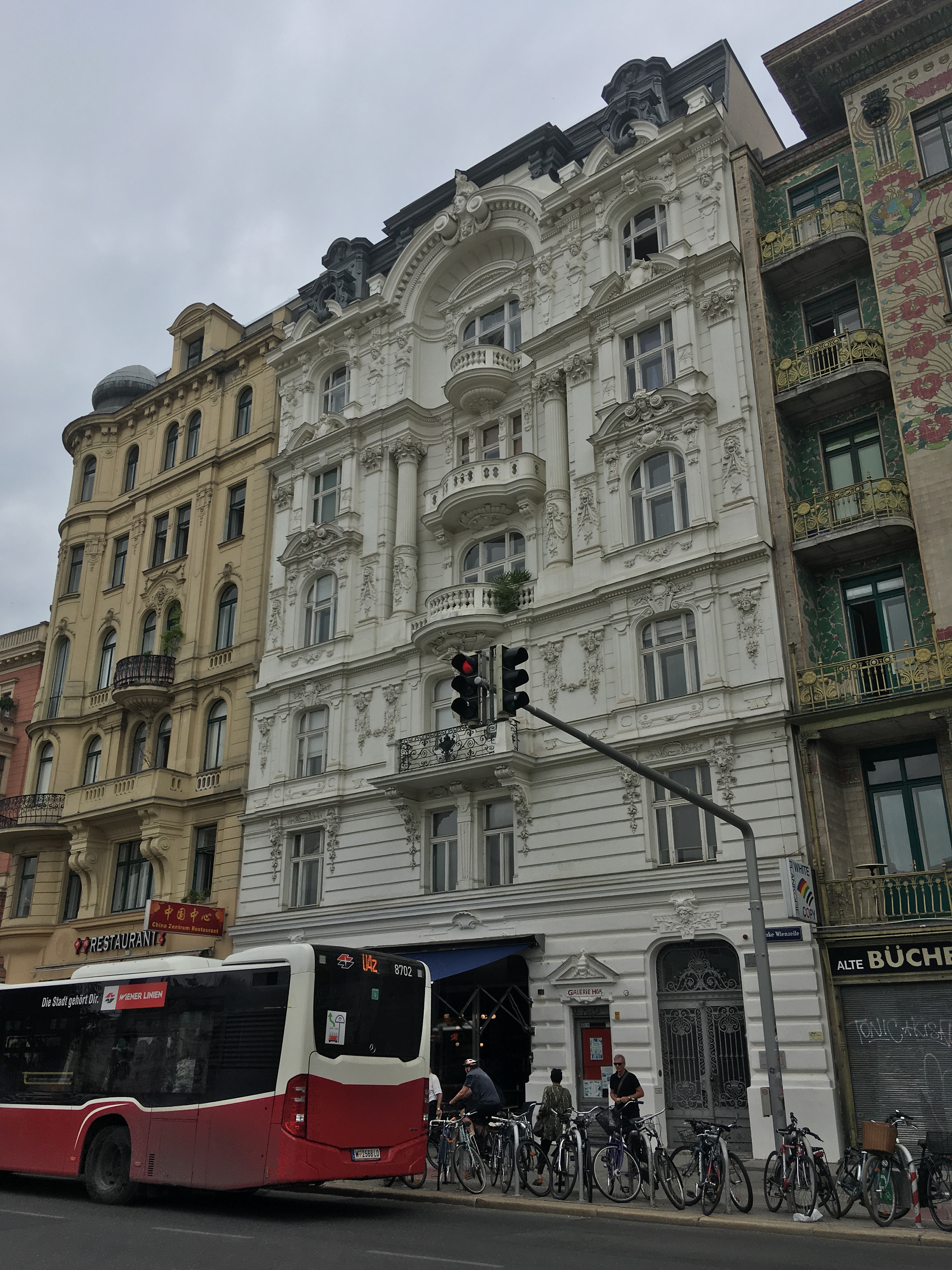
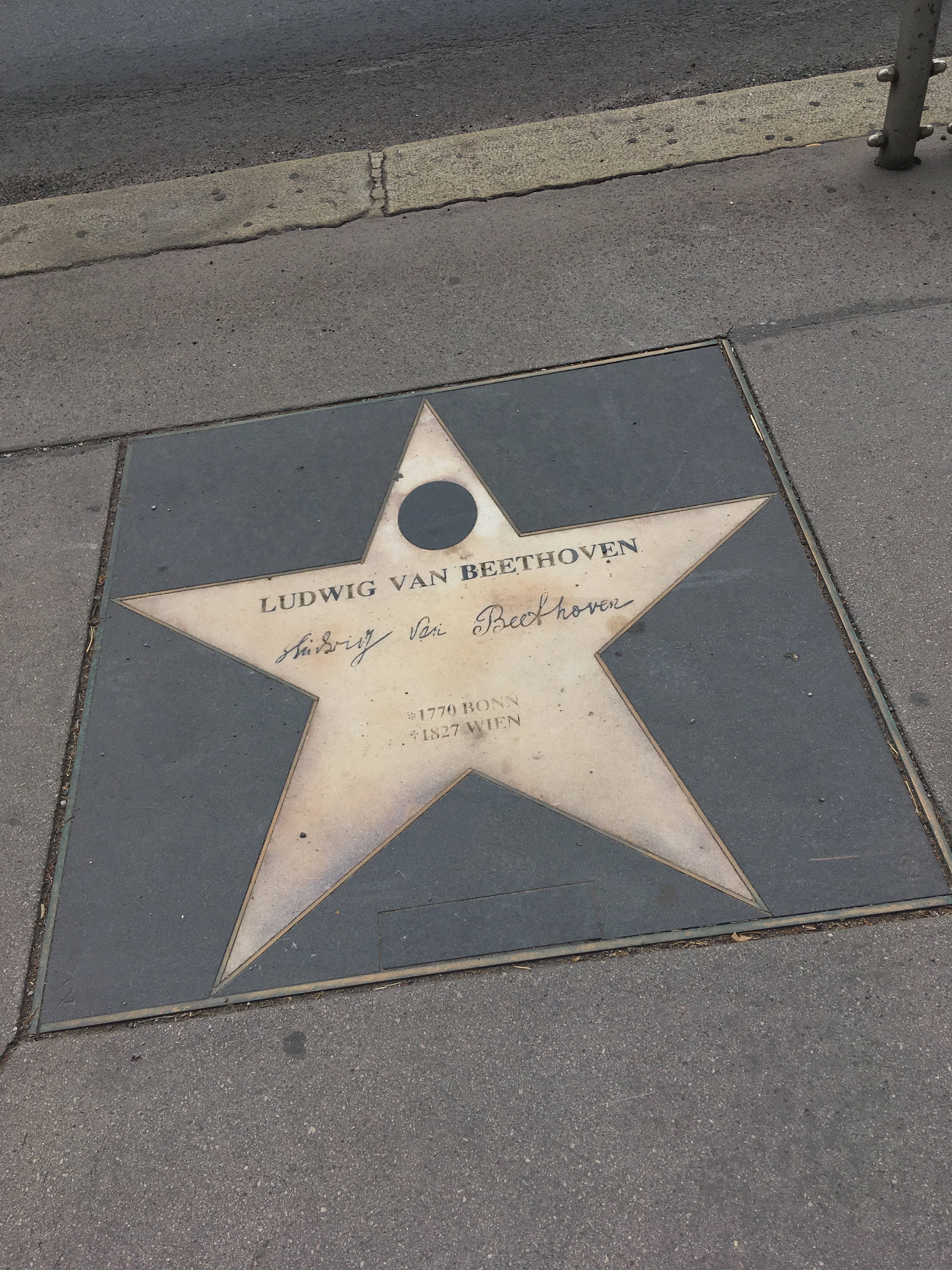
Turning 90 degrees to the right, I saw the building with the facade of roses and green leaves on a golden background and thought about how oppositely elaborate it was compared to the simple, worn streets of the Naschmarkt. Next to the rose wall was another highly decorated one with lots of arches and balconies with ornamented ‘eyebrows’ as I remember our old tour guide would put it. The side street even included a version of the Hollywood walk of fame by having stars of famous composers like Beethoven and Mozart below these walls. This made me think about the Loos reading and how he criticized pointless ornamentation because they served no other purpose than look pretty. I understood the point he was trying to make when comparing the elaborate, classy building facades in comparison to the busy, noisy flea market at Naschmarkt.
 Lorenzo