Walking through the tidy streets that were surrounded by tall, off-white buildings, we approached the University of Vienna. Thinking to myself that it was hot outside and that we needed to enter the building as soon as possible to avoid the sun, I led the group to enter by the side.
A couple of young, blond haired girls were both carrying a bookbag and a laptop as they walked past us and left the University. I told my friends, “cool, school is still in session! They are probably taking summer classes?” I proceeded to tell them about how I visited Humboldt University in Berlin, and joked that maybe we could sneak into a lecture. Roaming the silent halls, I observed the tall wide arches, white walls, the clean reddish-brown tile floor surface, and the classrooms on both sides of the hallway. My partner Rachel said that this scene reminded her of the typical highschool back home but without the trash and rowdy behavior from young, immature students.
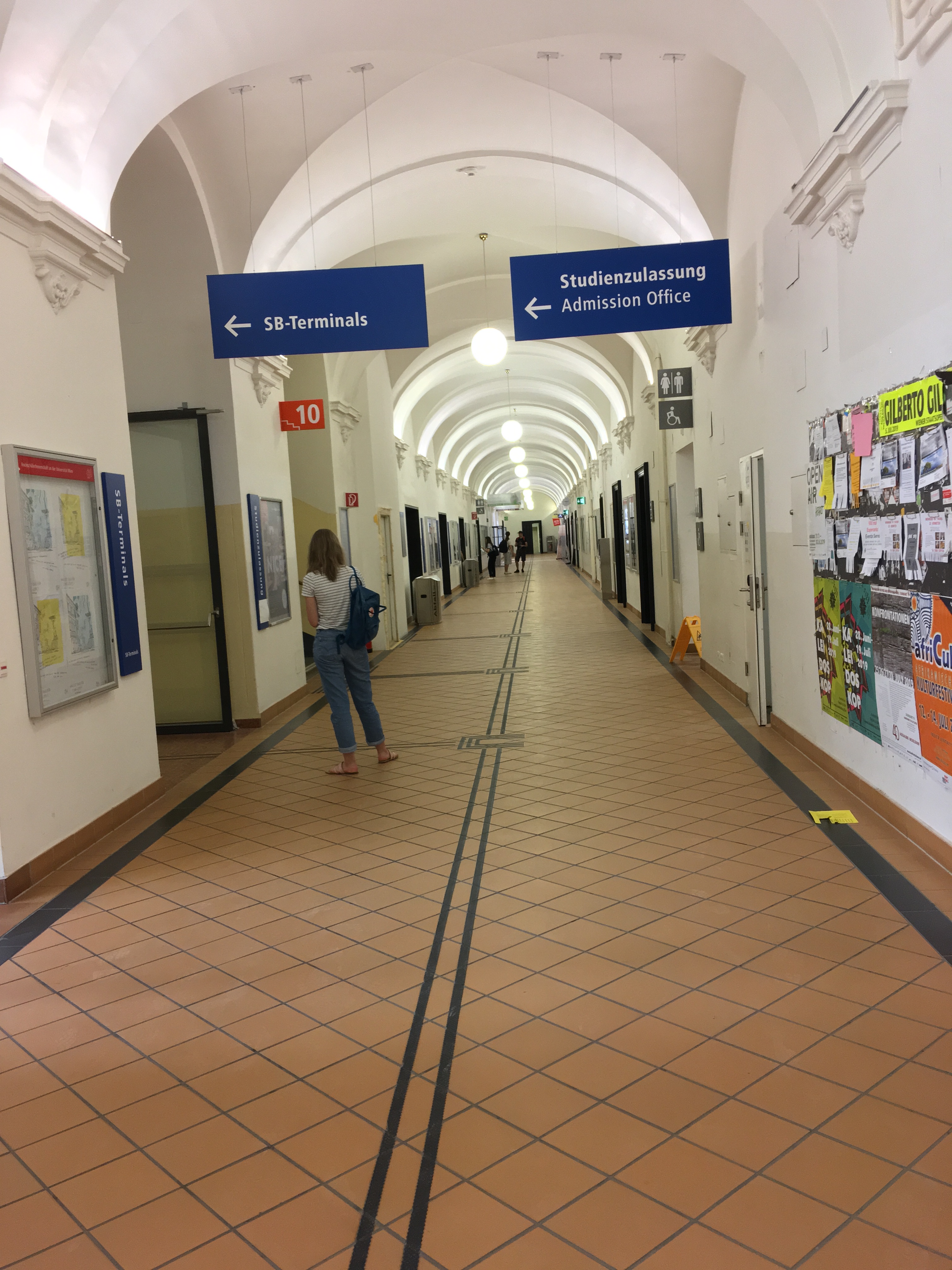
Her remark reminded me of the Cordileone assignment that we would be discussing in our first class in a couple days. The reading was about the historical significance of the National Austrian Museum, and a passage came to my mind which explained how one of the original goals of the new public museum in Vienna was to improve public taste. Having this more in depth understanding of purpose in art and architecture, I reflected on what Rachel had said and saw how the beautiful architecture, accompanied with the superb upkeep, was disseminating an elegant, classy atmosphere. I did not want to disrupt this peaceful environment while exploring the different rooms around campus.
Suddenly, as we were turning the corner through a silent computer lab filled with about thirty students who were focusing on their assignments, Rachel lost her footing and banged her leg on the table, and all of them raised their heads in our direction glaring at those strangers who had interrupted the prior tranquility. In my head, I was dying of laughter, however not wanting to extend the embarrassing episode, I continued straight towards the nearest exit.
Leaving the computer lab, we began to laugh at what had just happened, but that quickly died out as we began to admire the University’s atrium. The marble floors and ornamented arches surrounded the grass which was full of students relaxing on lawn chairs, blankets, and benches. Along the wall stood busts of various, unrecognizable alumni from the University of Vienna. I realized that most of them were successful or popular when we walked by Freud’s bust. I thought about how crazy it was to imagine Freud walking around campus conversing with his peers, chilling out on one of the chairs, or simply getting to class.
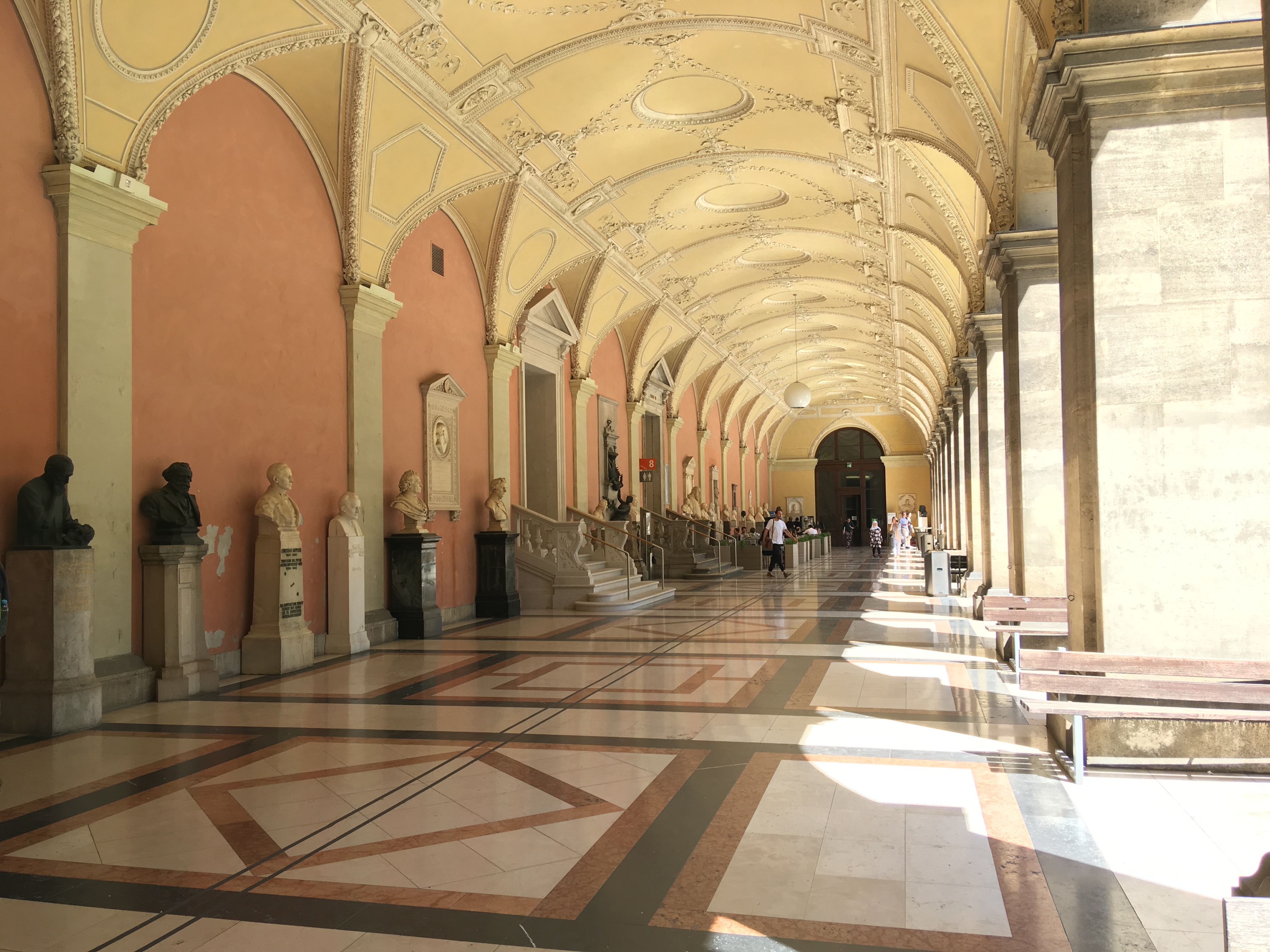
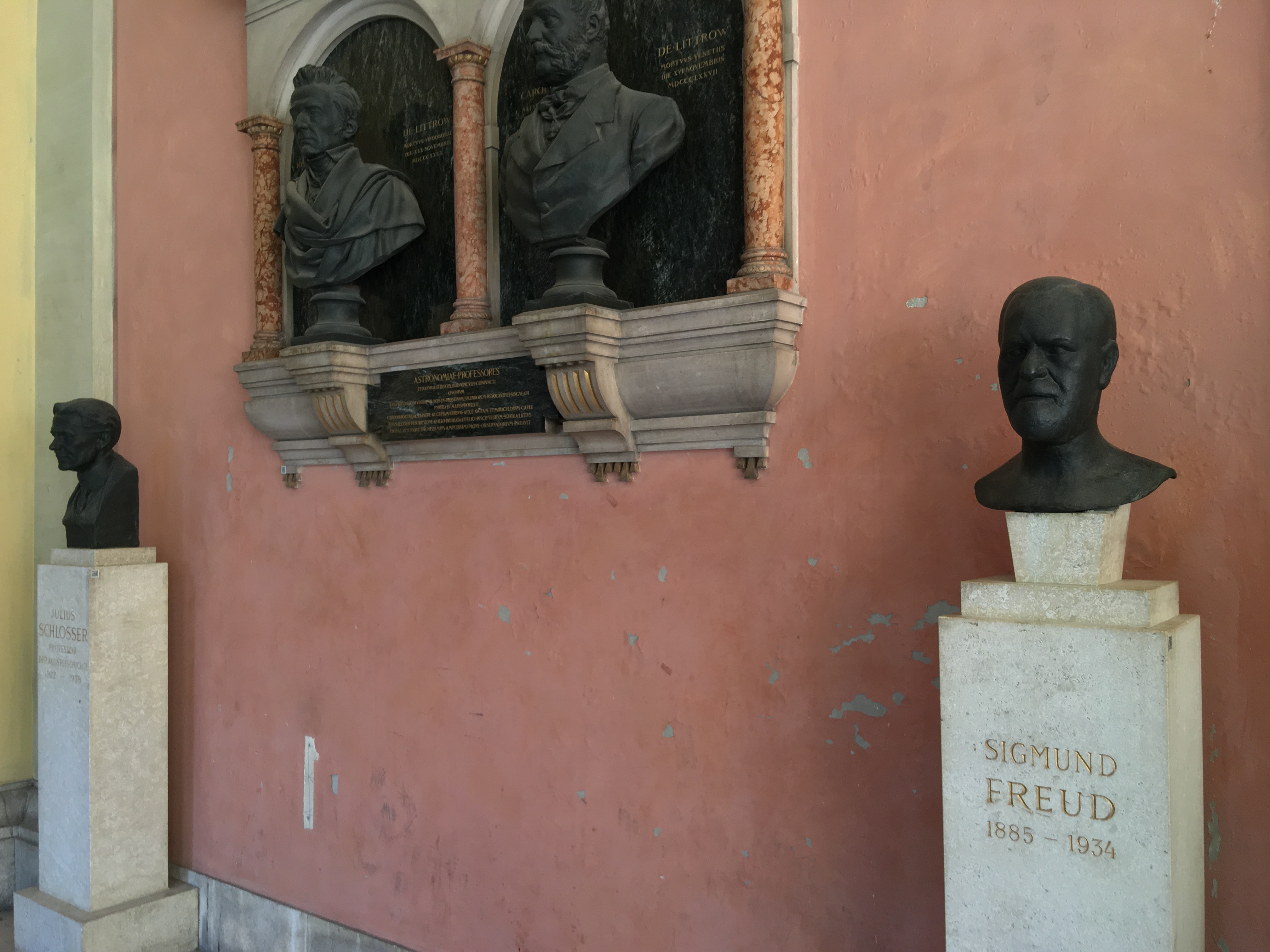
My sentiment when observing all the different busts surrounding the students lounging further echoed what I read from Cordileone. By surrounding the current students with distinguished alumni, like Freud, I bet they would feel more pride and honor knowing that they can do great things and make a name for themselves just like he did. Additionally, I thought about how through a good education system, Vienna could uplift itself from being a state always defeated by Germany in war to a more intellectual state that could improve its pedigree on the international stage, as was explored in the passage. I reflected on my own educational upbringing and felt very thankful to be in different environments that help me grow my character. A good education is truly a fruitful investment.
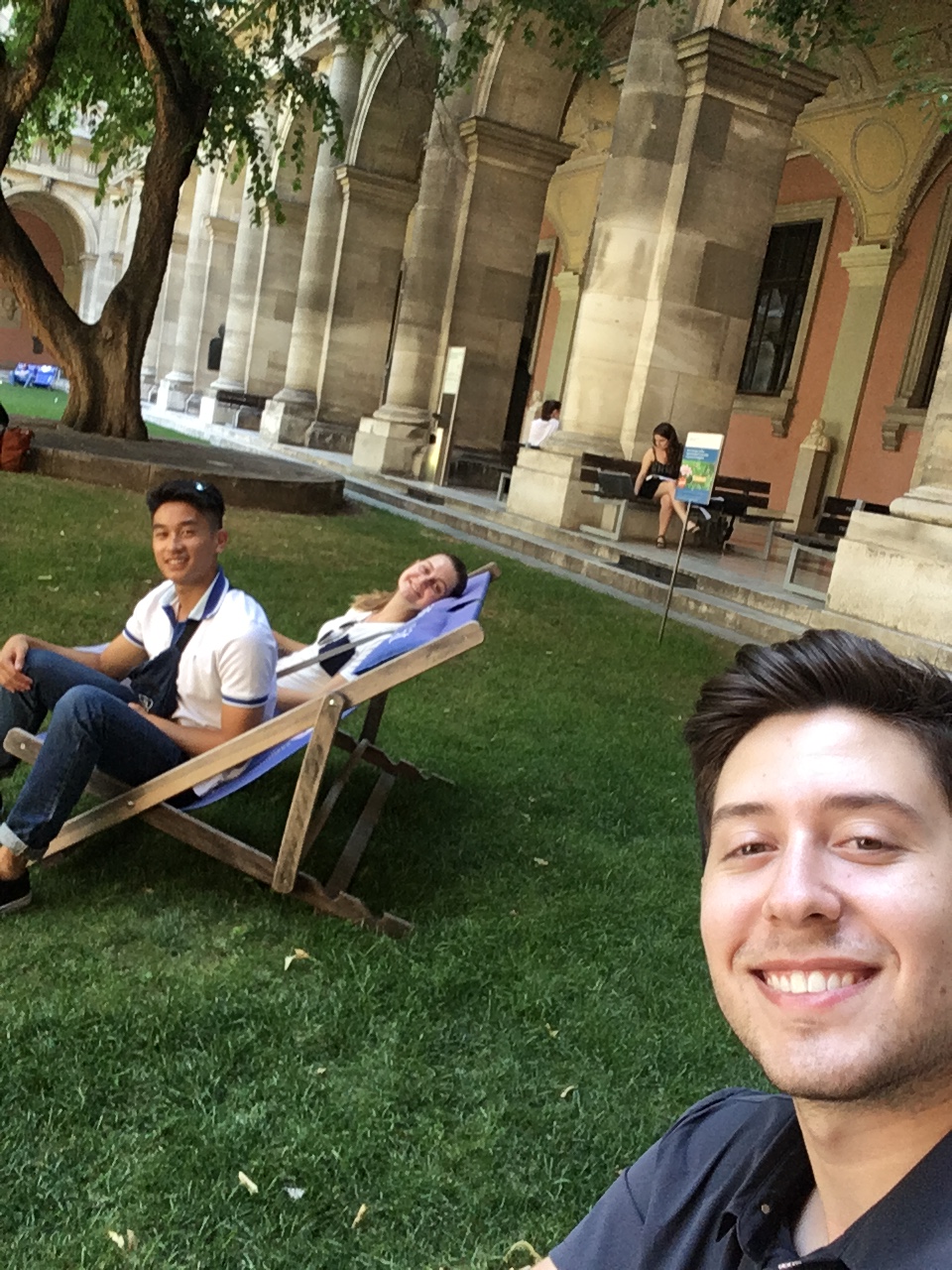
We continued to observe the beautiful courtyard and once one of the lawn chairs became available, we snagged it and enjoyed being students at the University of Vienna!
Works Cited
Cordileone, Diana Reynolds. Austrian StudiesVol. 16, From “Ausgleich” to “Jahrhundertwende”: Literature and Culture, 1867–1890 (2008), pp. 123-141
 Lorenzo